Growing Tourism to 2030: Enhancing a national identity of Timor-Leste

Timor Leste_CBET website

“Taking into account the growth of tourism in the South-East Asia region and the high priority that the Government of Timor-Leste (GOTL) is attaching to tourism development, the new National Tourism Policy will certainly be a very important document to further guide the growth of tourism in Timor-Leste in a sustainable and inclusive manner” UNWTO (2017)

Timor-Leste National Tourism Policy is a pledge by the Government of Timor-Leste to develop a unified and holistic tourism sector that places emphasis on sustainability, community, quality and business competitiveness. This Policy provides the framework to deliver on this ambition and is a call to action by industry, tourism agencies, government departments, academic institutions, and everybody with an interest in Timor-Leste tourism to partner, collaborate, and cooperate to ensure that we collectively achieve these ambitions.

That is from The Timor-Leste National Tourism Policy (2017)
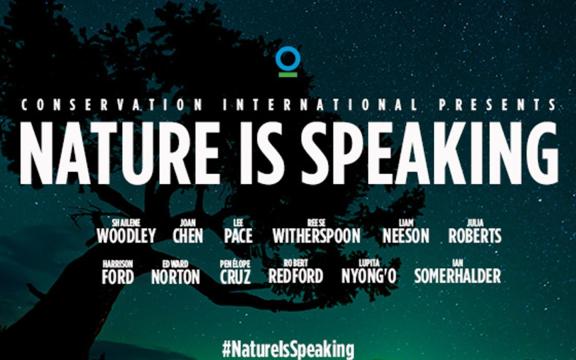
Nature is Speaking

NIS-AllTitles_Newsroom

Have you ever imagined the voices of our nature? If nature could speak, what would it say?

In “Nature is Speaking” campaign launched by Conservation International in 2015, people were invited to listen to nature. Their message to humanity is simple, that ‘nature doesn’t need people; but people need nature’.

There are 12 films including mother nature and other nature elements, such as forest, water, ice, mountain, coral reefs, flower, voiced by celebrities who donated their time and voice.

The series in here.

UNESCO World Heritage List: Lagoons of New Caledonia

Ilot Mato Lagoon Island, South Lagoon Wilderness Area New Caledonia. Photo by newcaledonialagoon.com

New Caledonia’s lagoons cover a total surface area of around 24,000 km². It is home to an exceptional diversity of plant and wildlife. The famous lagoons are a UNESCO World Heritage Site. They provide fish, coastal protection, and hold vast ecotourism potential.

In 2014, New Caledonia created 1.3 million km2 Natural Park of the Coral Sea (an area greater than twice the size of France). It marked a historic moment in marine conservation and is the first contribution to the Pacific Oceanscape by French overseas territory. Given high values for this area to sustains, an integrated approach to manage this Natural Park is important for the wellbeing of the people.

To see more references about Lagoons of New Caledonia (photos, video, map), visit UNESCO World Heritage Convention site.

UNESCO World Heritage Site: Mt Mantalingahan, Philippines

Mt. Mantalingahan Protected Landscape. Photo by Jeanne Tabangay.

Today and in the next blog post, I am going to share about UNESCO World Heritage Sites in the Asia-Pacific region: Mount Mantalingahan Protected Landscape in Philippines and Lagoons of New Caledonia.

What do you need to know about Mount Mantalingahan Protected Landscape? Below are some excerpts from the UNESCO World Heritage Convention site and references from Conservation International:

  • The protected landscape declared as the protected area in Palawan through Presidential Proclamation 1815 signed on June 23, 2009. It covers a total area of 120,457 hectares within the territorial jurisdiction of the municipalities of Bataraza, Brooke’s Point, Quezon, Rizal, and Sofronio Espanola.
  • The peak of Mt. Mantalingahan towering at 2085 meters above sea level is the highest peak in the province and considered sacred by the indigenous Palawan people.
  • The mountain’s substantial forest cover plays an important role in absorbing and storing carbon. Like many forests in this region, it faces considerable threats — including illegal logging and wildlife poaching, conversion to agricultural land, mangrove loss and unsustainable mining.
  • Mount Mantalingahan provides more than US$ 5.5 billion in ecosystem services to people. It is a key biodiversity area where new species are still being discovered.
  • It holds over half its original forest cover and provides an essential watershed for the 200,000 people that depend upon it

Willy: Ex-captive Javan Gibbon released to the forest with new family

Jatna, the son of Wili and Sasa
Jatna, the son of Willy and Sasa. Photo by Anton Ario.

Here is the short video about Willy, ex-captive Javan Gibbon that went back to the forest with his new family, on the International Gibbon Day. He was orphaned when he became a pet, then he was rehabilitated and formed his new family in the Javan Gibbon Center, West Java, before released to the forest.

How long the rehabilitation was? It took years and investments for wild behavioral preparedness, so they are ready when they return to the nature.

Javan Gibbon listed as Endangered on the IUCN Red List of Threatened Species (currently less than 4,000-5000 individuals in the wild). In addition to habitat loss, hunting for illegal pet trade is also a serious threat to Javan Gibbon (Nijman 2004; Supriatna 2006). Hunting one Javan Gibbon baby usually kills another 1-2 family members, as the adults were slaughtered so the poachers can sell the baby into the market. Therefore, this rehabilitation program aims to get them back to the forest, so the Javan Gibbon can support natural reforestation, which at the end, will benefits our people.