Discovering the Lau Seascape

A white-tipped reef shark swims between the coral in Lau Seascape.
Photo by Conservation International.

I visited Fiji this week, went to Lau Seascape – covers an area of roughly 114,000 square km. This area is threatened by climate change, unsustainable fishing, and coral reefs degradation. Managing this area will be crucial for ensuring its resilience to climate change and ensuring its services to provide food and livelihoods for thousand people.

In 2017, CI team conducted a Rapid Assessment Program (RAP) in Lau Seascape to highlighted areas of significant biodiversity that requires protection, as well as areas that have been over exploited and requires supportive management. The expedition discovered six new species and supported the establishment of Navatu Reef Marine Protected Area (MPA). Here is CI’s video about Lau Seascape.
‘Mantanomics’

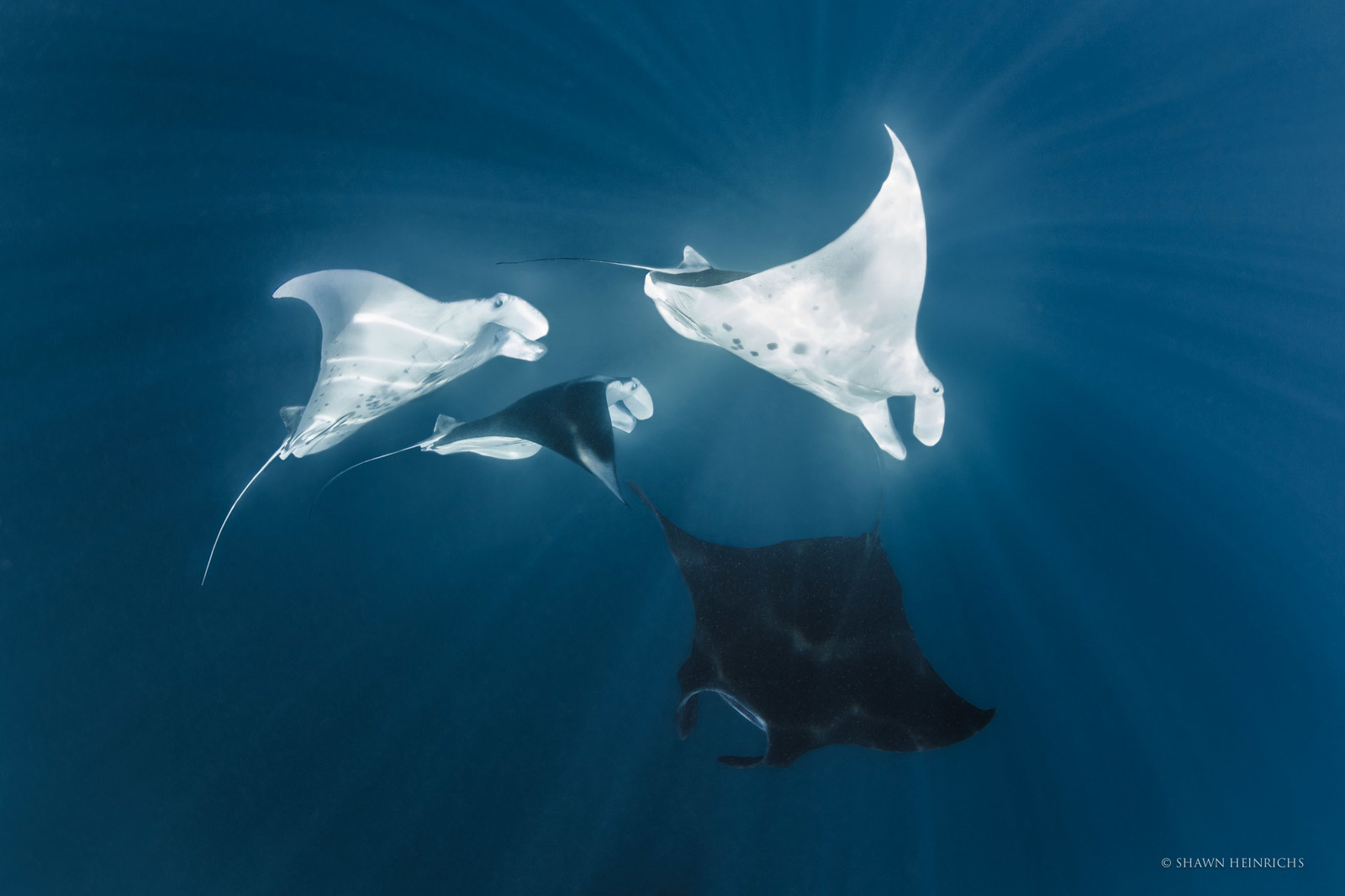
Sea life in West Papua, Indonesia. Photo by Shawn Heinrich.

Mantanomics demonstrates the economic value of manta rays, which are much more valuable as long-term sources of tourism revenue than as one-time revenue to fisheries. This study estimates the direct economic impact ($140 million per year) from tourism, which significantly exceeds the value of trade in manta ray gill plates ($5 million per year).

In 2014, Indonesia declared the largest manta ray sanctuary in the world. The Ministry of Marine Affairs and Fisheries granted full protected status that supports a US$ 15 million tourism industry per year. It is ranked as one of the top three destinations in the world for manta ray watching, mainly in West Papua. 

Here is the link to the paper:

https://journals.plos.org/plosone/article?id=10.1371/journal.pone.0065051

The Guardians of Raja Ampat

Guardians of R4
Children in Raja Ampat, West Papua. Photo by Shawn Heinrich.

Here’s a beautiful and important film that tells us stories about the true guardians of Raja Ampat, West Papua, Indonesia. Produced in conjunction with Conservation International by Shawn Heinrich (an Emmy Award winning cinematographer) and John Weller (photographer and filmmaker), this film illustrates how the aspirations and passions of the local communities drives the successful community-based conservation in Raja Ampat.

One of the stories in this film is about Rens Lewerissa, former shark hunter who now a conservation leader (see 34th minute).  Estimates are that over 70 million sharks are killed every year in the world.

Enjoy the 68 minutes film here.

LINK: Worm 2012 paper on Global Sharks Catches and Exploitation

New species of Orca

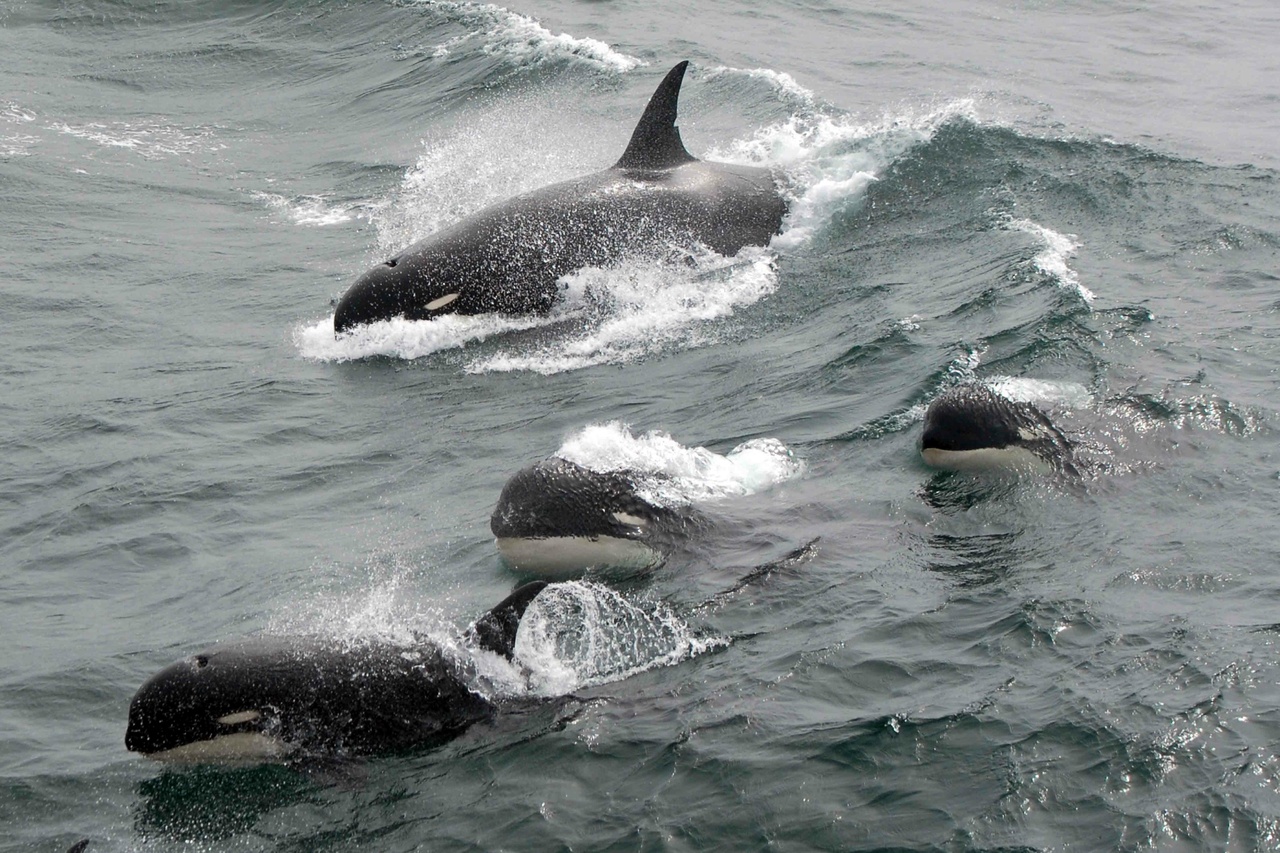
A rare photo of Type D killer whales showing their blunt heads and tiny eyepatches.
Photo by J.P. Sylvestre.

There are still some unknown species in the world – even whales and great apes. Just announced – a possible new species of Orca: type D or “sub-antarctic” that was previously known from anecdotal evidence from both fishermen and more recent digital photos by Antarctic tourists.  Bob Pitman described the “type D” ecotype in a paper in 2010 and NOAA just published video and announced that they had collected DNA.

Similar to recent discovery of new species of Orangutan in Northern Sumatra – a species that could go extinct soon after it is described by science. Pongo tapanuliensis is critically endangered and its existence is directly threatened by hydro power development plans, deforestation for palm-oil plantations and increasing human transmigration into remaining intact forest fragments.  


Coral reefs in Upolu Samoa

Samoa, Apia, Sinalei Reef Resort-
Samoa, Apia. Photo by Traveller.com.au

National Geographic published a video of the recent study by a team of researchers in Upolu island of Samoa. They concluded that the combination of climate change and human activity has led to intense die-offs around the Samoan island of Upolu.

Here is the abstract:

Coral reef ecosystems worldwide are immediately threatened by the impacts of climate change. Here we report on the condition of coral reefs over 83 km of coastline at the island of Upolu, Samoa in the remote South West Pacific in 2016 during the Tara Pacific Expedition. Despite the distance to large urban centers, coral cover was extremely low (<1%) at approximately half of the sites and below 10% at 78% of sites. Two reef fish species, Acanthurus triostegus and Zanclus cornutus, were 10% smaller at Upolu than at neighboring islands. Importantly, coral cover was higher within marine protected areas, indicating that local management action remains a useful tool to support the resilience of local reef ecosystems to anthropogenic impacts. This study may be interpreted as cautionary sign for reef ecosystem health in remote locations on this planet, reinforcing the need to immediately reduce anthropogenic impacts on a global scale.

Read the full study: Status of coral reefs of Upolu (Independent State of Samoa) in the South West Pacific and recommendations to promote resilience and recovery of coastal ecosystems