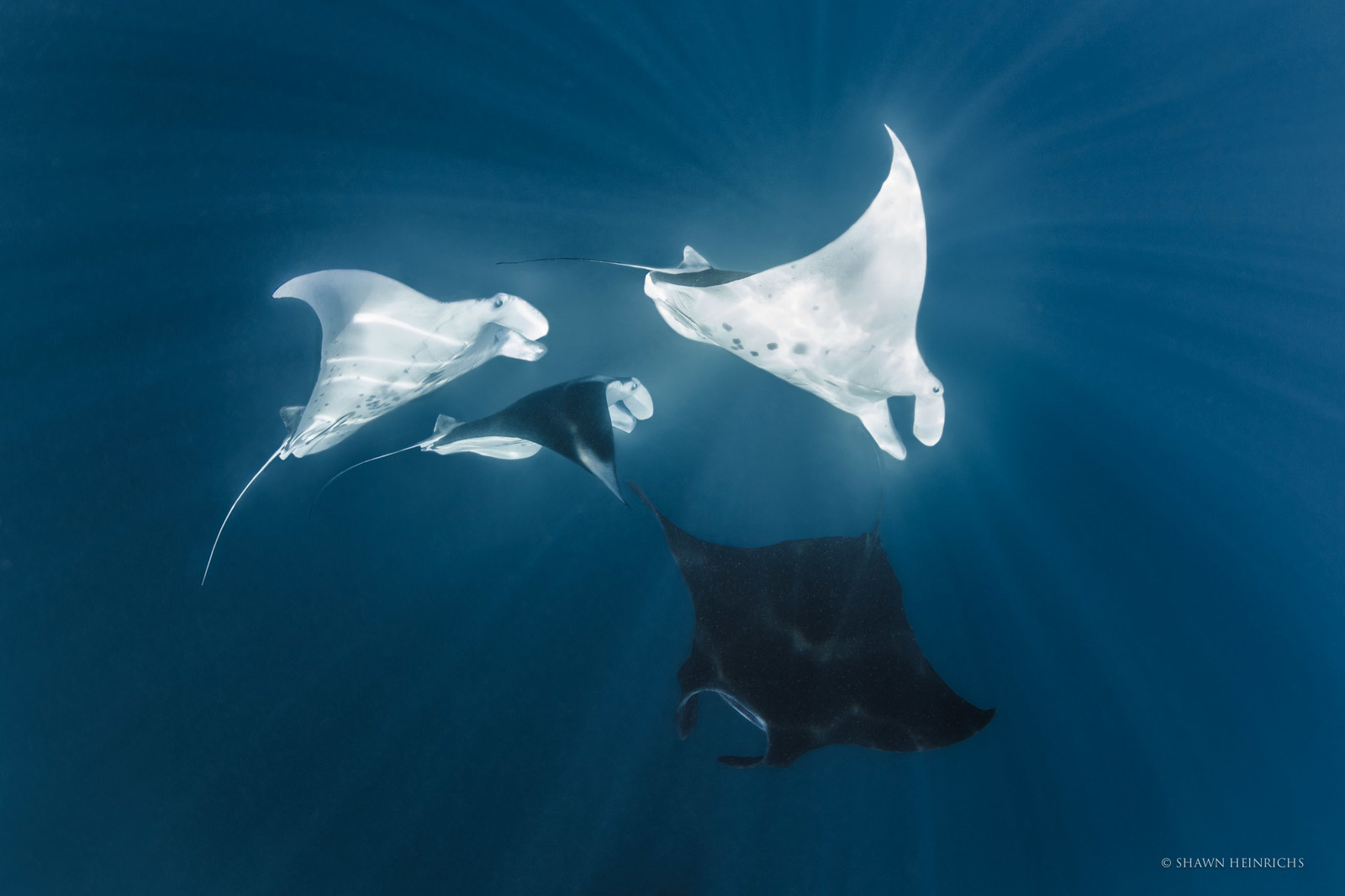
‘Mantanomics’

Sea life in West Papua, Indonesia. Photo by Shawn Heinrich.

Mantanomics demonstrates the economic value of manta rays, which are much more valuable as long-term sources of tourism revenue than as one-time revenue to fisheries. This study estimates the direct economic impact ($140 million per year) from tourism, which significantly exceeds the value of trade in manta ray gill plates ($5 million per year).

In 2014, Indonesia declared the largest manta ray sanctuary in the world. The Ministry of Marine Affairs and Fisheries granted full protected status that supports a US$ 15 million tourism industry per year. It is ranked as one of the top three destinations in the world for manta ray watching, mainly in West Papua. 

Here is the link to the paper:

https://journals.plos.org/plosone/article?id=10.1371/journal.pone.0065051

The Guardians of Raja Ampat

Guardians of R4
Children in Raja Ampat, West Papua. Photo by Shawn Heinrich.

Here’s a beautiful and important film that tells us stories about the true guardians of Raja Ampat, West Papua, Indonesia. Produced in conjunction with Conservation International by Shawn Heinrich (an Emmy Award winning cinematographer) and John Weller (photographer and filmmaker), this film illustrates how the aspirations and passions of the local communities drives the successful community-based conservation in Raja Ampat.

One of the stories in this film is about Rens Lewerissa, former shark hunter who now a conservation leader (see 34th minute).  Estimates are that over 70 million sharks are killed every year in the world.

Enjoy the 68 minutes film here.

LINK: Worm 2012 paper on Global Sharks Catches and Exploitation

West Papua, Indonesia: What is a Conservation Province?

13. World’s First Conservation Province
West Papua, Indonesia. Photo by LT&C.org

On 19 October 2015, the Government of West Papua, Indonesia declared the Conservation Province, showed commitment to maintaining ecological balance while creating sustainable livelihood and achieving sustainable development.  It is a policy blueprint that embraces nature conservation as the foundation for economic development in West Papua.

West Papua is one of the world’s most biodiverse places. With more than 80% forest, this province is one of the last large tropical rainforests on the planet, and it is also important to the world’s epicentre of marine biodiversity.  It also houses vast stores of carbon in its forests and mangroves.

The designation alone is not conservation success – we still have to make it work on the ground.  But it is a huge opportunity.  Perhaps the biggest conservation opportunity in the world right now.

Click here to see short video about Conservation Province.

See some related blog posts about Conservation Province in here.

Where does water comes from?

Jakarta
Jakarta’s skyline seen from the The Fountain Pen. Photo by Ecal Saputra.

Greater Jakarta is a living and breathing cityscape that sprawls over several provinces and is home for more than 30 million people.  This city’s water consumption is 1 billion m3/year.

Where does Jakarta’s water come from?

Gunung Gede Pangrango National Park, located about 80 km from the city, is the sources of the water for Greater Jakarta. The National Park is one of the oldest parks in Indonesia and was also declared as Biosphere Reserve by UNESCO. It has been estimated that the 60 more rivers flowing from the park provide water worth US$1.5 billion for domestic and agricultural uses.

It is one of the examples of the potential role of protected areas in helping to maintain water supply to major cities. More reference about forest protected areas for water supply can be found in this research report by the World Bank/WWF Alliance for Forest Conservation and Sustainable Use.

Willy: Ex-captive Javan Gibbon released to the forest with new family

Jatna, the son of Wili and Sasa
Jatna, the son of Willy and Sasa. Photo by Anton Ario.

Here is the short video about Willy, ex-captive Javan Gibbon that went back to the forest with his new family, on the International Gibbon Day. He was orphaned when he became a pet, then he was rehabilitated and formed his new family in the Javan Gibbon Center, West Java, before released to the forest.

How long the rehabilitation was? It took years and investments for wild behavioral preparedness, so they are ready when they return to the nature.

Javan Gibbon listed as Endangered on the IUCN Red List of Threatened Species (currently less than 4,000-5000 individuals in the wild). In addition to habitat loss, hunting for illegal pet trade is also a serious threat to Javan Gibbon (Nijman 2004; Supriatna 2006). Hunting one Javan Gibbon baby usually kills another 1-2 family members, as the adults were slaughtered so the poachers can sell the baby into the market. Therefore, this rehabilitation program aims to get them back to the forest, so the Javan Gibbon can support natural reforestation, which at the end, will benefits our people.