The Coral Triangle

Map of the Coral Triangle.

The Coral Triangle, located in the western Pacific Ocean, encompasses the waters of Indonesia, Malaysia, the Philippines, Papua New Guinea, Timor Leste, and the Solomon Islands. It is known for having the world’s highest biodiversity of coral and fish species, with over 600 species of coral and over 3,000 species of fish. The region is considered to be a global center of marine biodiversity and is of significant importance for both marine ecosystems and the local communities that rely on the resources provided by the ocean for their food, income, and protection from storms.

However, the coral reefs in the region are facing significant threats such as overfishing, pollution, and climate change, which are causing declines in the health of the coral reefs and reducing the biodiversity they support. In order to protect and preserve the unique biodiversity of the region, as well as the livelihoods and cultural heritage of local communities, conservation efforts are needed.

Some of the key conservation efforts underway in the Coral Triangle include the creation of Marine Protected Areas, promotion of sustainable fishing practices, implementation of climate change adaptation measures, and the implementation of community-based management approaches. These efforts are aimed at ensuring the long-term health of the coral reefs and the biodiversity they support, and preserving the resources that are critical to the livelihoods and well-being of the local communities.
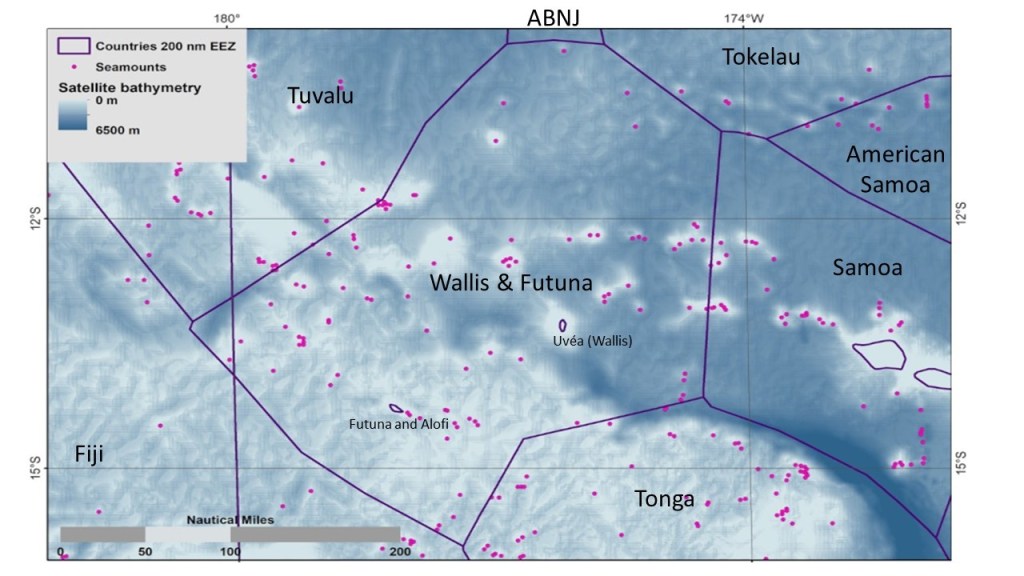
50-year moratorium on deep sea mining in Wallis & Futuna

Map of Wallis & Futuna. © Conservation International

Recognizing the bold commitment made by the Territorial Assembly of French territory Wallis et Futuna (led by President David Vergé) who passed a bill calling for France to conserve 100% of their maritime zone (265,000 square km) as a protected area for sustainable natural resource management. The move also called for the establishment of a 50-year moratorium on deep-sea mining. Most of the territory’s marine realm is formally classified as Ecologically and Biologically Significant under the Convention on Biological Diversity (CBD), featuring a wide range of charismatic species.

Discovering the Lau Seascape

A white-tipped reef shark swims between the coral in Lau Seascape.
Photo by Conservation International.

I visited Fiji this week, went to Lau Seascape – covers an area of roughly 114,000 square km. This area is threatened by climate change, unsustainable fishing, and coral reefs degradation. Managing this area will be crucial for ensuring its resilience to climate change and ensuring its services to provide food and livelihoods for thousand people.

In 2017, CI team conducted a Rapid Assessment Program (RAP) in Lau Seascape to highlighted areas of significant biodiversity that requires protection, as well as areas that have been over exploited and requires supportive management. The expedition discovered six new species and supported the establishment of Navatu Reef Marine Protected Area (MPA). Here is CI’s video about Lau Seascape.

‘Mantanomics’

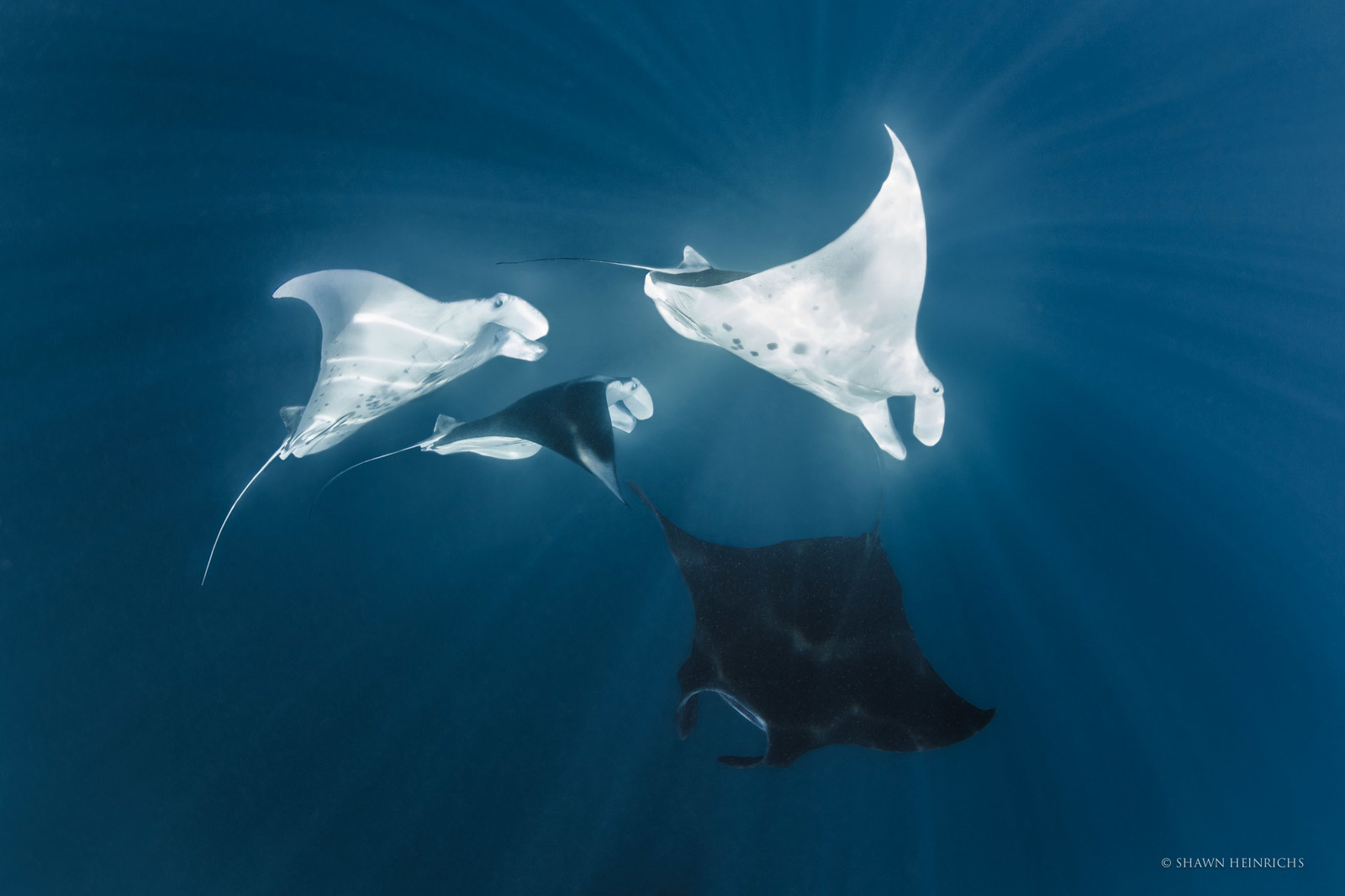
Sea life in West Papua, Indonesia. Photo by Shawn Heinrich.

Mantanomics demonstrates the economic value of manta rays, which are much more valuable as long-term sources of tourism revenue than as one-time revenue to fisheries. This study estimates the direct economic impact ($140 million per year) from tourism, which significantly exceeds the value of trade in manta ray gill plates ($5 million per year).

In 2014, Indonesia declared the largest manta ray sanctuary in the world. The Ministry of Marine Affairs and Fisheries granted full protected status that supports a US$ 15 million tourism industry per year. It is ranked as one of the top three destinations in the world for manta ray watching, mainly in West Papua. 

Here is the link to the paper:

https://journals.plos.org/plosone/article?id=10.1371/journal.pone.0065051

The Guardians of Raja Ampat

Guardians of R4
Children in Raja Ampat, West Papua. Photo by Shawn Heinrich.

Here’s a beautiful and important film that tells us stories about the true guardians of Raja Ampat, West Papua, Indonesia. Produced in conjunction with Conservation International by Shawn Heinrich (an Emmy Award winning cinematographer) and John Weller (photographer and filmmaker), this film illustrates how the aspirations and passions of the local communities drives the successful community-based conservation in Raja Ampat.

One of the stories in this film is about Rens Lewerissa, former shark hunter who now a conservation leader (see 34th minute).  Estimates are that over 70 million sharks are killed every year in the world.

Enjoy the 68 minutes film here.

LINK: Worm 2012 paper on Global Sharks Catches and Exploitation