Celebrating World Environment Day

Air Pollution, the theme for World Environment Day this year. Photo by Agencies.

The first major conference on environment was held from June 5-16, 1972 in Sweden. It marked a turning point in the development of international environmental politics. Later in December 1972, the General Assembly adopted a resolution (A/RES/2994 (XXVII)) designating June 5 as World Environment Day.

The theme for World Environment Day this year is Air Pollution.

Why do you need to care about air pollution? Read more here: “Five reasons you should care about air pollution”. Around 4 million (out of approximately 7 million) people who died from air pollution-related diseases every year live in the Asia-Pacific region.

Mt. Panie New Caledonia, the largest cloud forest in the Pacific

Mount Panie in New Caledonia. Photo by Conservation International.

I went to New Caledonia this week to see Mt. Panie reserves and other Conservation International’s initiatives in the country. The mountain is the highest mountain in New Caledonia (1,629 m), providing ecosystem and cultural services, home to three-quarter of plant species, and 95% reptile species are found nowhere else!

Our team has been working to conserve the Mt. Panie since 1996 and now supporting the expansion from 5,400 ha to 20,000 ha, to enabling this critical ecosystem to mitigate climate change impact. This forest also important to the continued flow of pristine rivers and the conservation of the downstream mangroves, coral reef and lagoons with its manta rays, turtles and whales.

Mapping Tool for Mangrove Restoration Potential

Mangroves restoration site in Bali, Indonesia. Photo by Conservation International.

Do you know where to focus on mangrove restoration? Recognizing this enormous potential of mangrove restoration, the experts from the Nature Conservancy, IUCN, and the University of Cambridge, merged innovative data to create an unique mapping tool, to allow decision-makers to identify areas for mangrove forest restoration.

With the new interactive map, the potential for restoring more than 800,000 ha of mangroves will be possible. Find more details in this link.

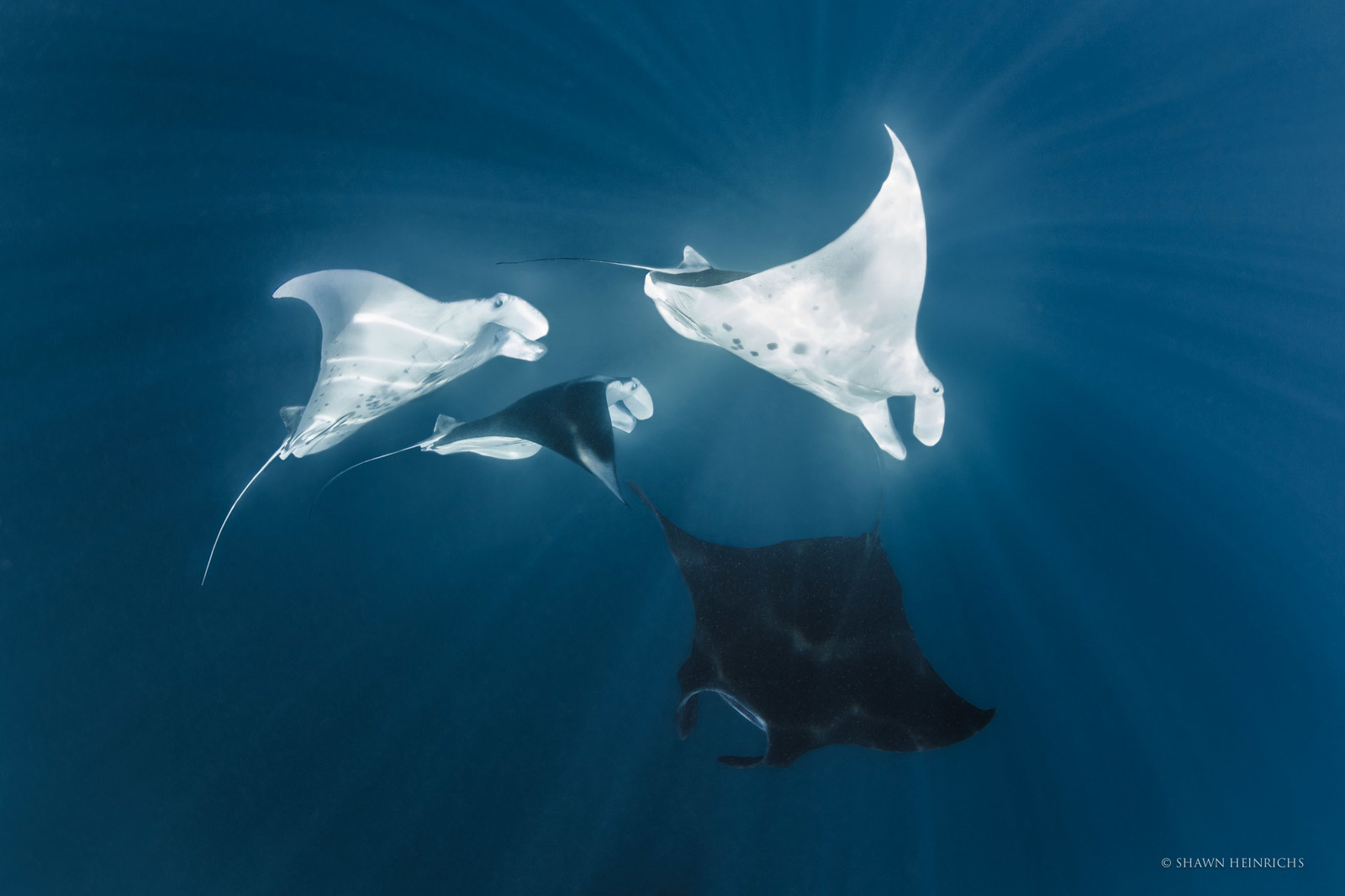
‘Mantanomics’

Sea life in West Papua, Indonesia. Photo by Shawn Heinrich.

Mantanomics demonstrates the economic value of manta rays, which are much more valuable as long-term sources of tourism revenue than as one-time revenue to fisheries. This study estimates the direct economic impact ($140 million per year) from tourism, which significantly exceeds the value of trade in manta ray gill plates ($5 million per year).

In 2014, Indonesia declared the largest manta ray sanctuary in the world. The Ministry of Marine Affairs and Fisheries granted full protected status that supports a US$ 15 million tourism industry per year. It is ranked as one of the top three destinations in the world for manta ray watching, mainly in West Papua. 

Here is the link to the paper:

https://journals.plos.org/plosone/article?id=10.1371/journal.pone.0065051

The Guardians of Raja Ampat

Guardians of R4
Children in Raja Ampat, West Papua. Photo by Shawn Heinrich.

Here’s a beautiful and important film that tells us stories about the true guardians of Raja Ampat, West Papua, Indonesia. Produced in conjunction with Conservation International by Shawn Heinrich (an Emmy Award winning cinematographer) and John Weller (photographer and filmmaker), this film illustrates how the aspirations and passions of the local communities drives the successful community-based conservation in Raja Ampat.

One of the stories in this film is about Rens Lewerissa, former shark hunter who now a conservation leader (see 34th minute).  Estimates are that over 70 million sharks are killed every year in the world.

Enjoy the 68 minutes film here.

LINK: Worm 2012 paper on Global Sharks Catches and Exploitation